Showing posts with label Media. Show all posts

Yemen War

The Yemen war between the Houthi forces and Saudi Arabia backed Hadi government forces has raged for over 3 years and is a very controversial subject regarding UK government involvement. The UK currently has arms deals to Saudi Arabia, worth £4.6bn since 2015. The Saudi government, who back the Hadi government forces in Yemen, are using arms against innocent civilians. Air strikes and drone strikes have been misused and have subsequently taken thousands of lives.

Donald Trump confirmed a new arms deal with Saudi Arabia worth £8.9bn on 20/3/18 which risks more war crimes in Yemen and potentially more civilian casualties.

Below is a protest by amnesty international from 2016. The drone is labelled ‘made in Britain, ruining lives in Yemen’ a protest highlighting the involvement of the UK in the Yemen War. This protest was successful as it created attention and awareness around the issue which extended beyond the houses of parliament into the houses of the public. By choosing the media of paper mache and its weak strength it juxtaposes the death and destruction the real mass destruction weapon can cause.

An Amnesty International campaigner holds a model of a missile in protest at British arms sales to Saudi Arabia. Photograph: Chris Ratcliffe/Getty Images


Amnesty International, No to Drones Protest, Outside the Houses of Parliment,
alamystock.com, 2016.

This issue became the focus of my practical work where I created four posters exploring consequences of this war. A running theme in the work is the lack of media coverage, reflected in the title ‘3 years unreported’. I created the designs to resemble movie posters to attract more attention than the usual charity poster. The ‘credits’ are facts about the war and the Saudi arms deals.

3 Years Unreported, Cholera Outbreak, James Kiely, 2017.

3 Years Unreported, No Access to Food, James Kiely, 2017.

3 Years Unreported, No Access to Education, James Kiely, 2017.

3 Years Unreported, Refugees, James Kiely, 2017.


References

Playing with Words While Yemen Burns: Managing Criticism of UK Arms Sales to Saudi Arabia Source: Global Policy [1758-5880] Stavrianakis, Anna yr:2017 vol:8 iss:4 pg:563 -568

https://www.express.co.uk/news/politics/928303/Saudi-Arabia-Prince-Mohammed-bin-Salman-UK-visit-protests

https://www.rt.com/op-ed/424980-yemen-saudi-strike-media/

http://www.spokesman.com/stories/2017/jun/28/from-destruction-to-cholera-yemen-war-brings-disas/#/0

https://www.gettyimages.co.uk/event/amnesty-protest-against-arms-sales-to-saudi-arabia-611726507#amnesty-international-activists-march-with-homemade-replica-missiles-picture-id516312958


Palestine Poster Project

The Palestine poster project documents the propaganda and creative dissent from 1965 to 2000 it is one of the largest libraries of its type. The role of the poster is one of the most important media types of 'dissent', over recent history, it has been the most popular form of publicising opinion and demonstrating change.

Jornada de Solidaridad, Faustino Perez, 1968.


The conflict in 1965 involved the extremist group known as Fatah, a militant group of Palestinian nationals. The poster attempts to stereotype this group with the usual wear of a Palestinian Nationalist, however clever use of replacing the eye with the barrel of a gun. The barrel is illustrated in red giving connotations of death and destruction. Day of solidarity to of Palestine is the title of the poster a UN day of remembrance for people who have died during the Palestine wars.


Visit Palestine, Franz Krausz, 1936.
Visit Palestine, Amer Shomali, 2009.

Visit Palestine, Des affiches pour Gaza, 2014.

David Tartakover's response reimagines the first poster that was initially used to generate more tourism in Palestine during the late 1930's. The poster reappropriates the landscape by adding militants, explosion clouds and the 'separation barrier'. What I would call a lighter-hearted attempt to generate a serious response by the viewer. I say 'light-hearted' due to the reappropriation of the initial poster, an area looking so positive becoming somewhere so contradictory. The poster is almost a crude representation of the conflict and the area.

Gaza Love, Kyle Goen, 2014.

A very well known symbol again reimaging a western icon. Initially titled 'love' to 'Gaza' this was made in the USA to generate a military response, it was used throughout many protests. Its iconic appearance makes it stronger as it alternates the familiar and therefore evokes a strong response.


Gaza Pinwheels, Mohammed Hassona, (Palestine), 2014.
Part of the Project Pinwheel memorial project the poster above attempts to raise awareness and remember the 521 children killed during the operation protective edge. The dark poster depicts the falling shells and the innocents of the children below that were lost in the conflict.


The 50-year difference between the first and last poster shows the prominence of the poster in Gaza, and the change it can promote. A very different selection of graphic art created to cause a change. However, with 50 years of conflict and 1,600 recorded posters does this show the little impact posters can make, the situation in Gaza is as volatile as ever and I wonder how many more posters it could take to make the constructive change needed to establish peace?

References


Visual Impact, Creative dissent in the 21st century, Liz McQuiston.

http://mondoweiss.net/2015/07/bombers-blood-posters/

https://im7mad.wordpress.com/

http://www.palestineposterproject.org/content/about-the-palestine-poster-project-archives-0

http://www.bbc.co.uk/news/world-middle-east-20415675

https://www.afsc.org/resource/gaza-pinwheel-project

Technology Challenging the Appearance of Dissent

Journalists and protestors have been recording their experience in rallies and protests since the invention of cameras. The development of camera phones and their widespread availability has meant this footage has become commonplace, with photographs and videos online and in the dominant media documenting peoples experiences. The quality of this footage is and its legitimacy is often questioned due to the off the cuff nature of the recording. Usually, the footage is filmed in a frantic crowd. According to Fred Dalmasso, this allows the dominant media outlets to manipulate the footage and to capture typical faces of dissent and aggression.

Below is an example of a 'typical' media response to a protester, the man is captured in the defiant action of throwing a smoke bomb, attempting to make the mob appearance more dangerous than the police.

Protesters and the police clashed Friday in Istanbul. Demonstrations began Tuesday over plans to redevelop a park in Taksim Square that is the last significant green space in the centre of the city. Credit-Bulent Kilic/Agence France-Presse — Getty Images

Here, however, is a photo that was featured in the same article, civilians running away tear gas surrounding them, a more empathetic response to the civilians.

Protesters waded through tear gas on Friday at Taksim Square in Istanbul. Credit Tolga Bozoglu/European Pressphoto Agency.

Hiwa K's work 'This Lemon Tastes of Apple' shows his perspective from the protests, tear gas surrounding him and members of his family. The title refers to the smell of the gas and how the locals use lemon juice to combat the effects. The video is very powerful, the pain of the protesters being swarmed by tear gas is shown effectively. In my opinion, this shows the danger of the police or the military and protests against they're harsh and dangerous actions. The video is part of an installation (shown below) the sound is very loud and immerses the viewer in the footage.


Hiwa K's. This Lemon Tastes of Apple. Installation. 2011.
Videos from the kettles are effective in showing the carnage and the intense feeling of danger, footage like this are now easily circled through social media channels this allows more freedom of speech. It also shows the acts of terror from the police or militia who are meant to be there to protect society.

To conclude, technology is changing the way people perceive protests personal approaches including mobile phone footage aids people in the kettle, giving them protection to a certain degree. However, media outlets will always be able to edit anything put in the public domain. The attitude of the dominant media outlets needs to change, people need to understand their agendas and political connections along with commercial gain.


References

Remote Spectating, Drone images and the Spectacular Image of revolt- Fred Dalmasso.

Art and Politics Now - Anthony Downey


https://www.youtube.com/watch?v=fgmGxKvGFWU

http://www.nytimes.com/2013/06/01/world/europe/police-attack-protesters-in-istanbuls-taksim-square.html


Vietnam War & Challenging Public Perceptions of Conflict

Public perceptions of conflicts are primarily shaped by the media. However, the arts has its own voice, using predominately an image to tell the story it has a power far greater than just using words. An image can portray; emotion, a connection to the viewer, dissent. Within this post, I shall discuss the power of art when forming dissent against the filtering of information by the government and media outlets.


Jarr’s work above shows how the U.S. filtered the visual information from the Afghanistan War, the public was not allowed to see anything not deemed appropriate. This was done by buying all satellite imaging rights so they were in control of the images the public were allowed to see. This enabled them to feed the population with images selected by the government and create a war 'aesthetic'.  The power of the text is its transparency. The lack of image represents the filtering of information, leaving the public with just facts and information. Free from any influences, such as the media, it was placed in a gallery leaving the viewer to believe that this information to be unbiased. However, Jarr will have his own bias opinion on the conflict this will have an influence on the work, therefore, this works success is limited in my opinion.


Gianni Motti's work titled Collateral Damage, are photographs from the Yugoslav wars. These photographs were given to him by various media outlets because they had not been used, this was due to the photos creating the wrong aesthetic. The photographs show the beautiful landscapes interrupted by clouds of smoke from weapons of mass destruction. This reinforces the theory of governments and the media creating an aesthetic, by removing the inappropriate images from circulation to give people false impressions of conflicts. The strength in Motti's work is the selection of photographs in the series, (available here: http://www.cabinetmagazine.org/issues/12/motti.php) standing alone the image does not do it justice.

Gianni Motti's Collateral Damage, 2003.


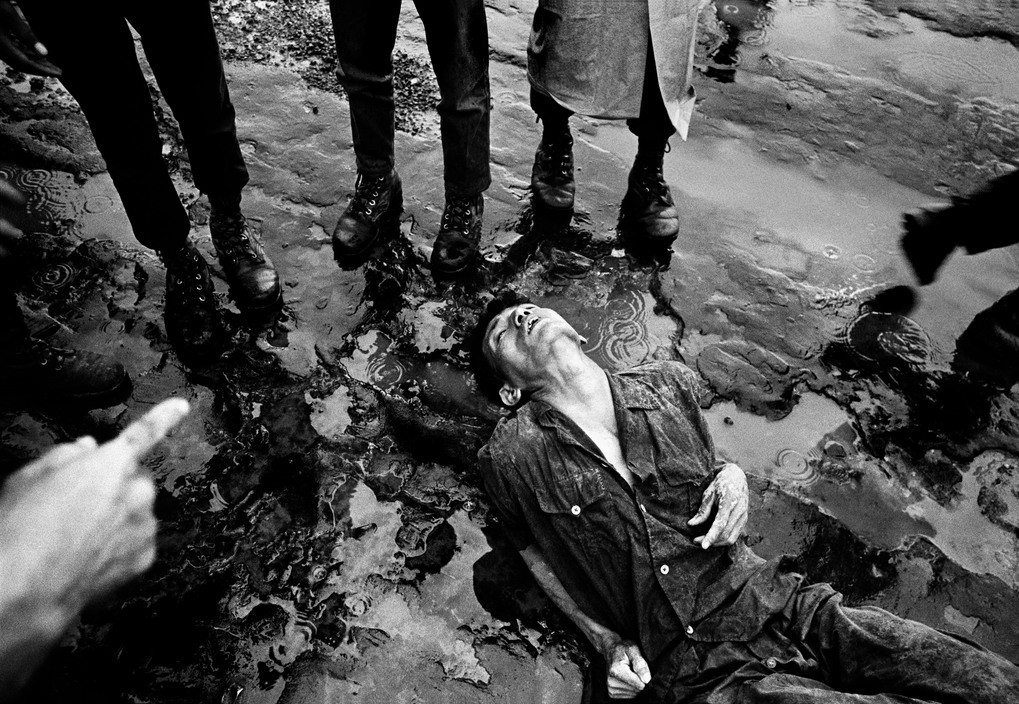
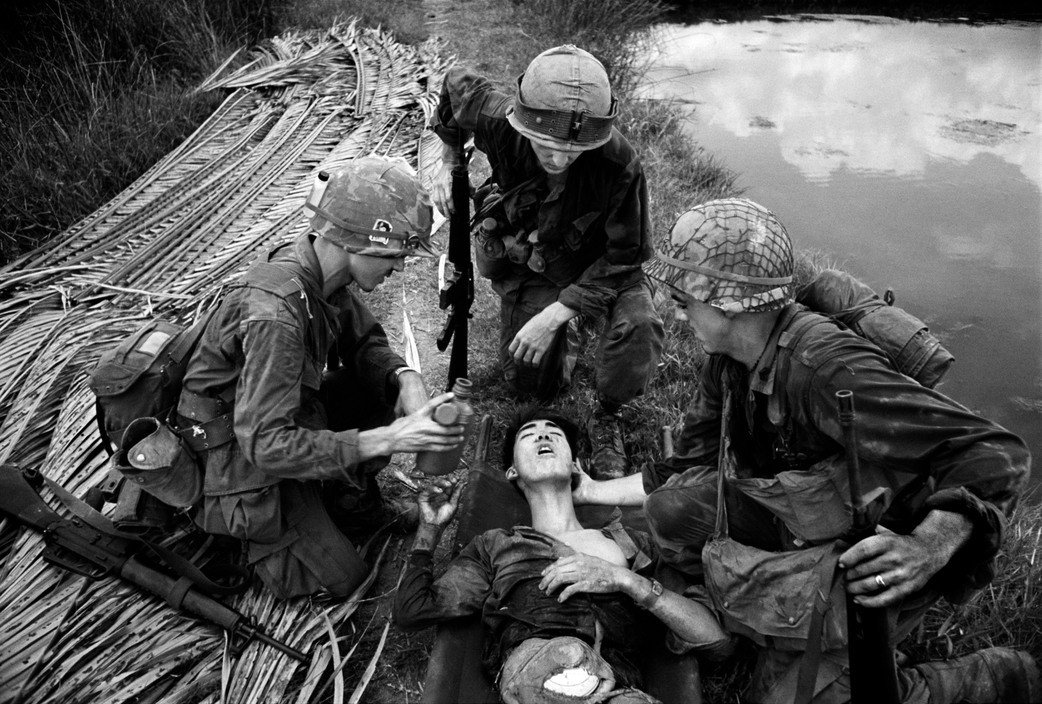
Changing the public perception of wars away from government lead media outlets is a form of creative dissent. Particularly in conflicts, photojournalism has been a crucial method used. The Vietnam war captured by Philip Jones-Griffiths is beyond dark and upsetting, these images didn’t fit in the U.S. government war aesthetic, therefore it took them 3 years to become published (1971).  The body of work Griffiths produced has an integrity because of its raw uncensored view of the conflict. Photojournalism has been questioned for being unethical because the photographer can frame the image to provoke a different response than the real-life situation. Ethics are also questioned when looking at the image rights, do the people in the photograph have rights to the image royalties.
“Philip Jones-Griffiths' brutal and shocking documentation of the horrors of the Vietnam War that was crucial in changing public perceptions of the conflict”
“Griffiths created a compelling argument against the dehumanizing power of the modern war machine and American imperialism.” - Magnum Photos

Quang Ngai, Vietnam. Philip Jones Griffiths. 1967. © Magnum Photos

Philip Jones Griffiths-VIETNAM. Hue. Refugees flee across a damaged bridge. Marines intended to carry their counterattack from the southern side, right into the citadel of the city... using skin-diving equipment from the Marines. 1967. © Magnum Photos.


Philip Jones-Griffiths. Prisoners of war were afforded very different treatment by each side... captured Vietcong was to, raped, and killed... 1970. © Magnum Photos.

Philip Jones-Griffiths. The battle for Saigon. American G.I's often shown compassion toward the Vietcong...This VC had fought for three days with his intestines in a cooking bowl strapped to his stomach. Vietnam. 1968. © Magnum Photos.

The effect of these photographs being released was huge, changing the way many pictured war. Connotations of war hero's and bravery were taunted, with the many war crimes that occurred in Vietnam. Crimes not only against the Vietnamese people but the American soldiers fighting the war under false information by the government. The power of the photographer had truly been reached affecting how much information governments now give to the general public.

References;

Art and Politics Now. Anthony Downey.

Visual Impact, Creative dissent in the 21st century, Liz McQuiston.

Graphic Agitation 2

Philip Jones-Griffiths Magnum Photographer, more photographs and larger detailed captions available here >>>  https://www.magnumphotos.com/newsroom/conflict/vietnam-inc/

https://www.independent.co.uk/news/obituaries/philip-jones-griffiths-photographer-whose-vietnam-images-changed-photojournalism-799333.html